Governance

Project PRAKASH - Precision-Driven Response for Anemia Control and Sustainable Health

Ongoing | February 2025- Present

About

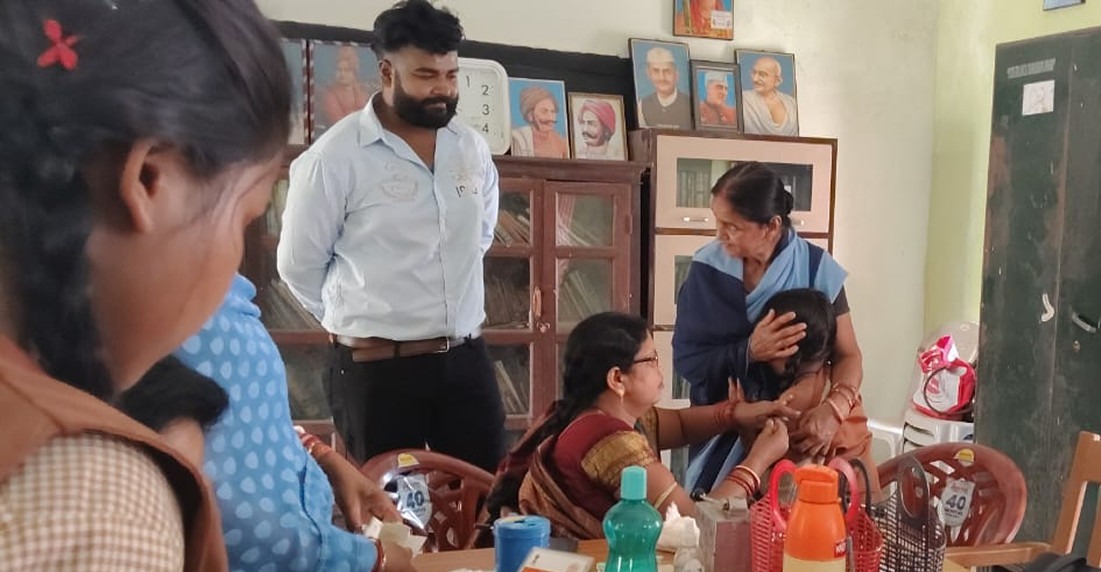
An ICMR-funded implementation research study to strengthen the delivery of the Anemia Mukt Bharat 2.0 program among vulnerable populations in Kendujhar district, Odisha.
Schedule
  • Duration: 42 months
  • Geography: All 13 Community Development Blocks of Kendujhar District, Odisha
  • Funder: Indian Council of Medical Research (ICMR), Ministry of Health and Family Welfare, Government of India, New Delhi.
  • Partners: KIIT Deemed to be University (KIIT-DU); Tata Institute of Social Sciences (TISS)
  • Delivery Model: Multi-site, mixed-methods implementation research
  • Target Group: Children (6–59 months), Children (5–9 years), Adolescent Girls & Boys (10–19), Women of Reproductive Age (20–49), and Pregnant Women
  • PRAKASH — Precision-Driven Response for Anemia Control and Sustainable Health — is an implementation research study designed to develop and test effective intervention delivery strategies for the Anemia Mukt Bharat (AMB) 2.0 programme, with the goal of reducing anemia prevalence among vulnerable populations in selected districts of India.

    Implemented in Kendujhar district of Odisha and funded by the Indian Council of Medical Research (ICMR), the 42-month study is a collaborative effort between InOrder – The Health Systems Institute, KIIT Deemed to be University (KIIT-DU), and the Tata Institute of Social Sciences (TISS).

    PRAKASH is a National Health Research Priority (NHRP) project, aimed at strengthening the on-ground delivery of one of India’s most ambitious nutrition programmes.
    Primary Objective:
      To co-design, optimise, implement, and evaluate a district-level model that reduces anemia prevalence to ≤20% within 2.5 years among:
    • Children aged 6–59 months
    • Adolescent girls aged 10–19 years
    • Women of reproductive age (20–49 years)
    • Pregnant women

    Secondary Objectives
    • Achieve at least 80% effective population-based coverage of selected AMB 2.0 interventions.
    • Document the iterative implementation process, contextual adaptations, and implementation outcomes to inform future scale-up.
    Phase Focus
    Phase I – Preparatory Stakeholder consultations, recruitment, training, tool pre-testing
    Phase II – Formative Health systems diagnosis, baseline assessments, identification of barriers and facilitators
    Phase III – Implementation Co-development of the intervention model, iterative refinement, continuous monitoring
    Phase IV – Reporting & Dissemination Synthesis of findings, scale-up model development
    Principal Investigator:
      Prof. (Dr.) Bhuputra Panda — Professor, KIIT-DU & Senior Advisor, ACCESS Health International
    Co-Principal Investigators:
    • Dr. N. Krishna Reddy, CEO, ACCESS Health International & President, InOrder – The Health Systems Institute
    • Prof. (Dr.) Harshad Thakur, Dean, School of Media & Cultural Studies, Tata Institute of Social Sciences (TISS), Mumbai
    • Prof. (Dr.) Sonali Kar, HOD, Department of Community Medicine, Kalinga Institute of Medical Sciences (KIMS), KIIT-DU
    • Dr. Deepanjali Behera, Assistant Professor, School of Public Health, KIIT-DU
    By piloting evidence-based interventions and generating actionable insights, this initiative aims to deliver the following outcomes to significantly reduce anemia across the region:
    • A sustainable, scalable district-level model for anemia prevention and control.
    • Implementation lessons that inform national policy and program strengthening for AMB 2.0.
    • A measurable reduction in anemia prevalence among target population groups.